Recent increases in electricity prices and projections that Maryland will likely face further price hikes and growing energy shortages in the coming years is compelling some commercial real estate owners to search for ways to contain their costs and secure their energy supply.
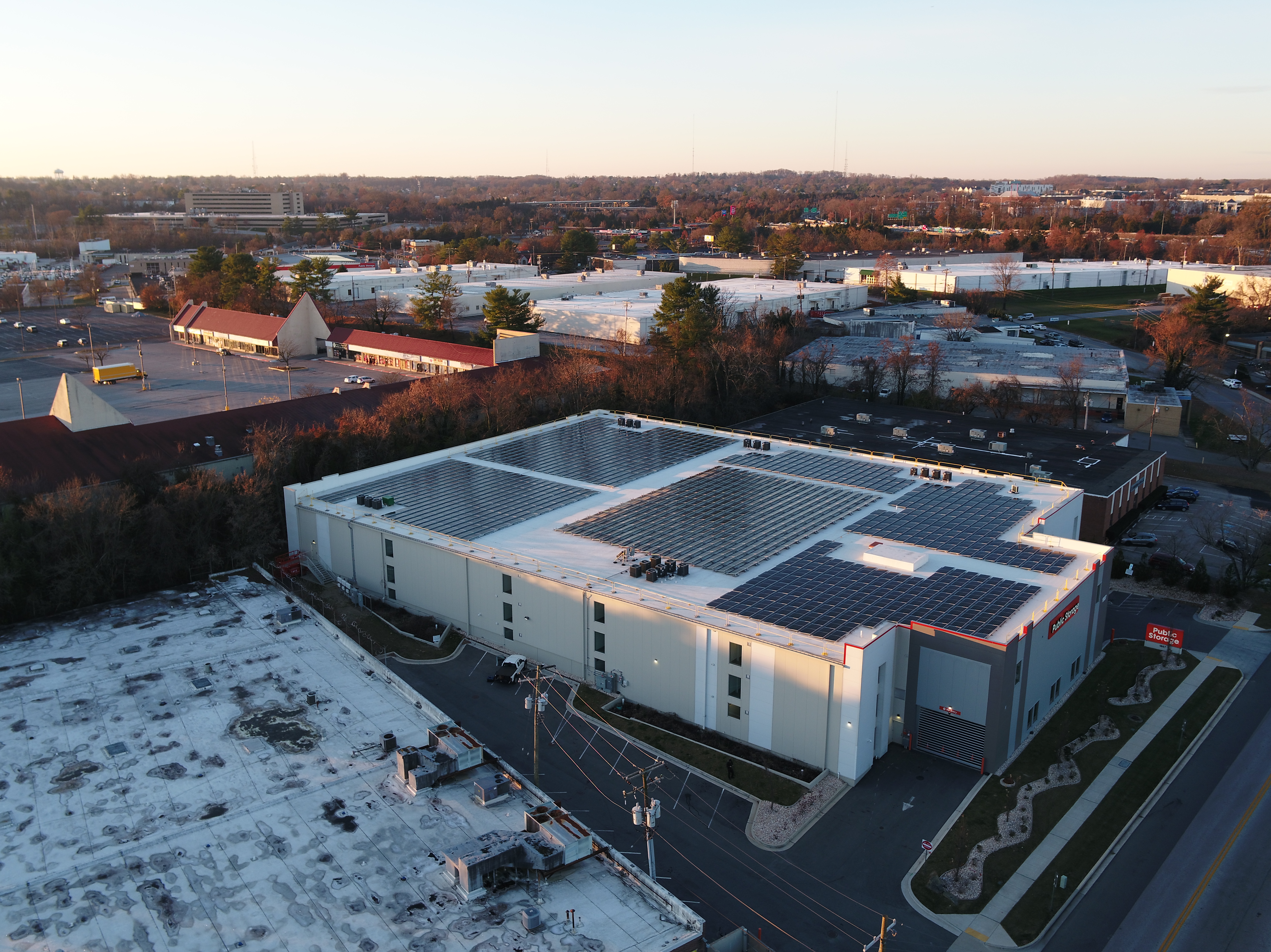
Many owners of industrial and self-storage facilities are rushing to arrange rooftop solar installations before federal tax credits expire in July 2026. Photo courtesy of Solar Landscape.
“As traditional demand levels meet new demand from electrification and digital infrastructure, access to reliable, cost-effective energy will be top of mind in the coming years,” said Danielle Schline, Senior Vice President and Investment Officer for Prologis’ Mid-Atlantic market.
A recent Prologis survey concluded that a significant portion of companies have experienced some sort of energy disruption in the past year, from price volatility to weather-driven outages. The findings also reveal that executives are worried about reliability, saying they fear outages more than any other disruption and are willing to pay a premium for properties with reliable energy infrastructure.
Energy market analysts say those concerns are founded.
As electricity demand is rising rapidly due to data center development and the electrification of buildings and vehicles, electricity supply has lagged, with some generation plants removed from grid capacity, either through mothballing of coal-powered plants or through exclusive supply contracts.
“Entire power plants are coming off the grid because they are making sweetheart deals with AI data centers to exclusively provide them with 100 percent of their power,” said Christine Ciavardini Devine, Client Relationship Manager for MD Energy Advisors. “This creates a perfect storm for higher energy prices.”
Bringing new gas-fired power plants online is expected to take five to seven years, and new nuclear plants will likely take a decade, so energy users can expect to face rising prices and energy demand challenges for several years to come.
“I think we’re at the early stages of just how dire the situation can be,” said Shaun Keegan, Founder and CEO of Solar Landscape.
So, what can a CRE owner do to contain their energy costs and safeguard their supply?
Hone your energy portfolio
“Businesses need to think about energy like an investment portfolio and continually manage and diversify their sources of electricity in order to get the best rates and budget certainty,” Ciavardini Devine said.
Reviews of clients’ energy contracts often turn up unpleasant surprises, she said. “We see contracts where customers are paying extreme prices per kilowatt hour or per therm of gas. We see contracts that expired years ago and the customer has been left paying a floating rate.”
Today’s consumers have better and more varied options for buying their electricity.
Sellers of power purchase agreements (PPAs) have expanded contract offerings to include shorter term agreements – as little as 10 years – to appeal to CRE owners. PPAs that buy power from off-site community solar projects “usually are five-year contracts, allow early termination without penalty and automatically provide a 10 percent discount on your bill because its community solar,” she said. (That discount was part of the enabling legislation.)
Generally, businesses benefit from actively monitoring energy markets and tailoring their energy purchases, Ciavardini Devine said. “The approach we take in energy buying for a lot of clients is dollar cost averaging by purchasing different amounts of energy at different times and through contracts with different prices and terms in order to manage risk and achieve the best overall pricing.”
The solar installation spree
Rooftop solar installations on commercial properties are “the most shovel-ready form of new generation right now because they are located near infrastructure — big wires, substations, etc. — and with rooftops, there’s no NIMBY issues,” Keegan said.
Decisions by the Maryland government to pilot and then make permanent the community solar program have created a simple, profitable way for CRE owners to add rooftop solar to their energy planning, he said.
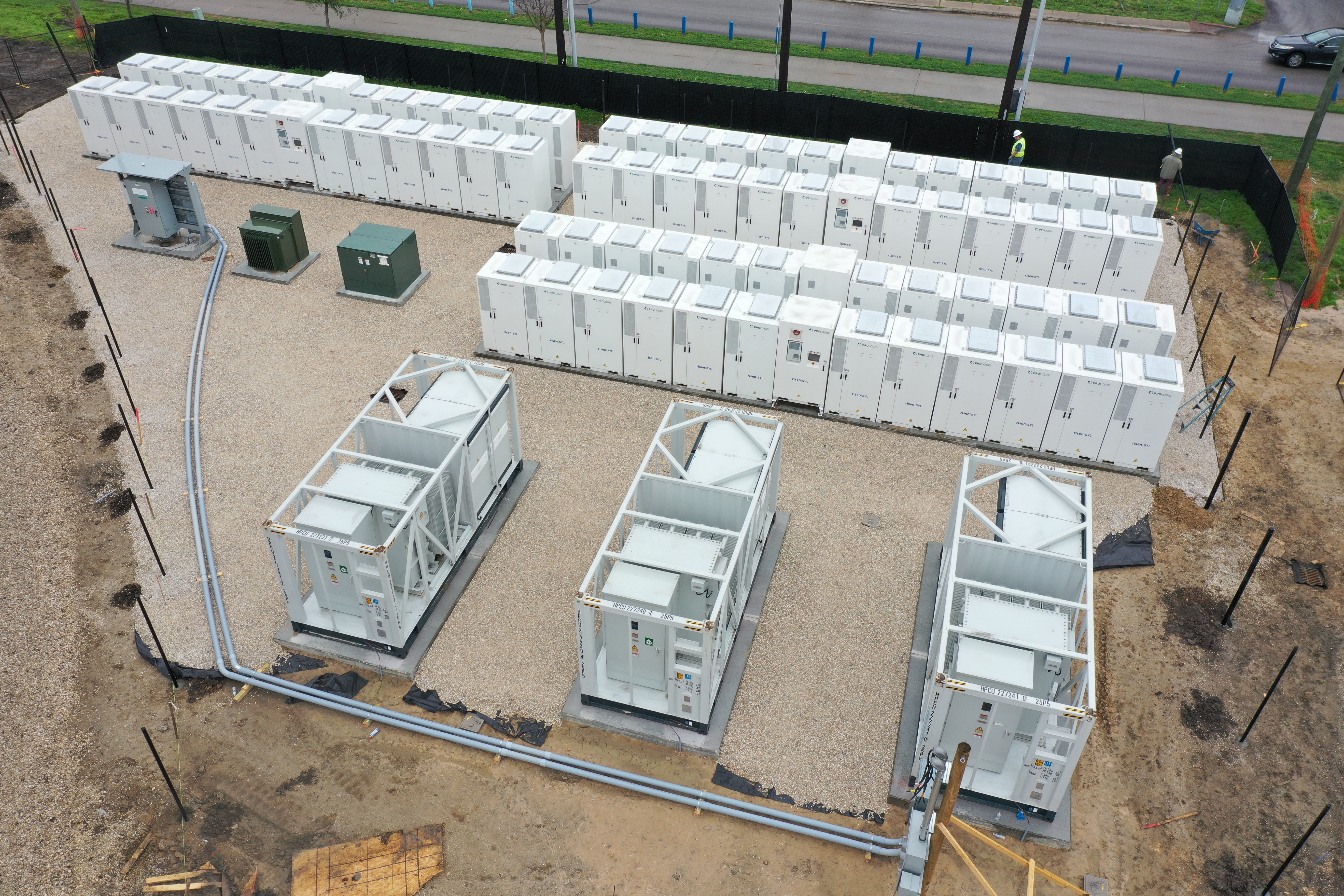
Prologis is a major adopter of rooftop solar and, in some states, is already adding battery plants to the PV installations. Photo courtesy of Prologis.
“What this means for commercial real estate is it removes the challenging, previous situation with behind-the-meter billing for rooftop solar,” Keegan said.
Previously, CRE owners who wanted to install rooftop solar, would have to make some arrangement to sell the generated power to that building’s tenants. Community solar operates on a different financial arrangement. Developers lease roof space for solar installations. The power generated is fed into the grid and sold to customers of the community solar developer.
Since community solar typically charges five percent to 10 percent less per kilowatt hour than standard grid energy, some CRE companies ask to customize contracts to provide tenants with the option to purchase their power from the community solar company, Keegan said.
Community solar “is particularly popular with industrial and self-storage facilities right now,” Keegan said. The arrangement “can also work for flex buildings and even retail as long as you have at least 40,000 square feet of open roof space and the roof is seven years old or newer.”
The community solar industry is currently seeing a rush to start projects by July 2026 when the 30 percent federal tax incentive for solar installations will end. Installations must then be completed by 2030.
Companies that host community solar installations may become eligible for a further energy and financial advantage in the near future, Keegan said. Battery technology is improving, its price is dropping and some states, including Maryland, are looking to incentivize battery installations.
“If you have a community solar lease on your roof, you could be first in line to potentially receive more rental income for siting a battery project on your land in the future,” he said.